Skip to content
Sliding vs Casement Windows: Which Is Better for Your Home?
Choosing new windows is not simply about deciding how they look. The way a window opens can affect ventilation, natural light, space, maintenance, noise, and everyday comfort.
Two of the most common choices for modern homes are sliding windows and casement windows.
Both can offer excellent performance when properly designed and installed, but they work differently and suit different spaces.
So, which one should you choose?
The answer depends less on which style is “better” and more on what your room actually needs.
What Is the Difference?
The biggest difference is how the window operates.
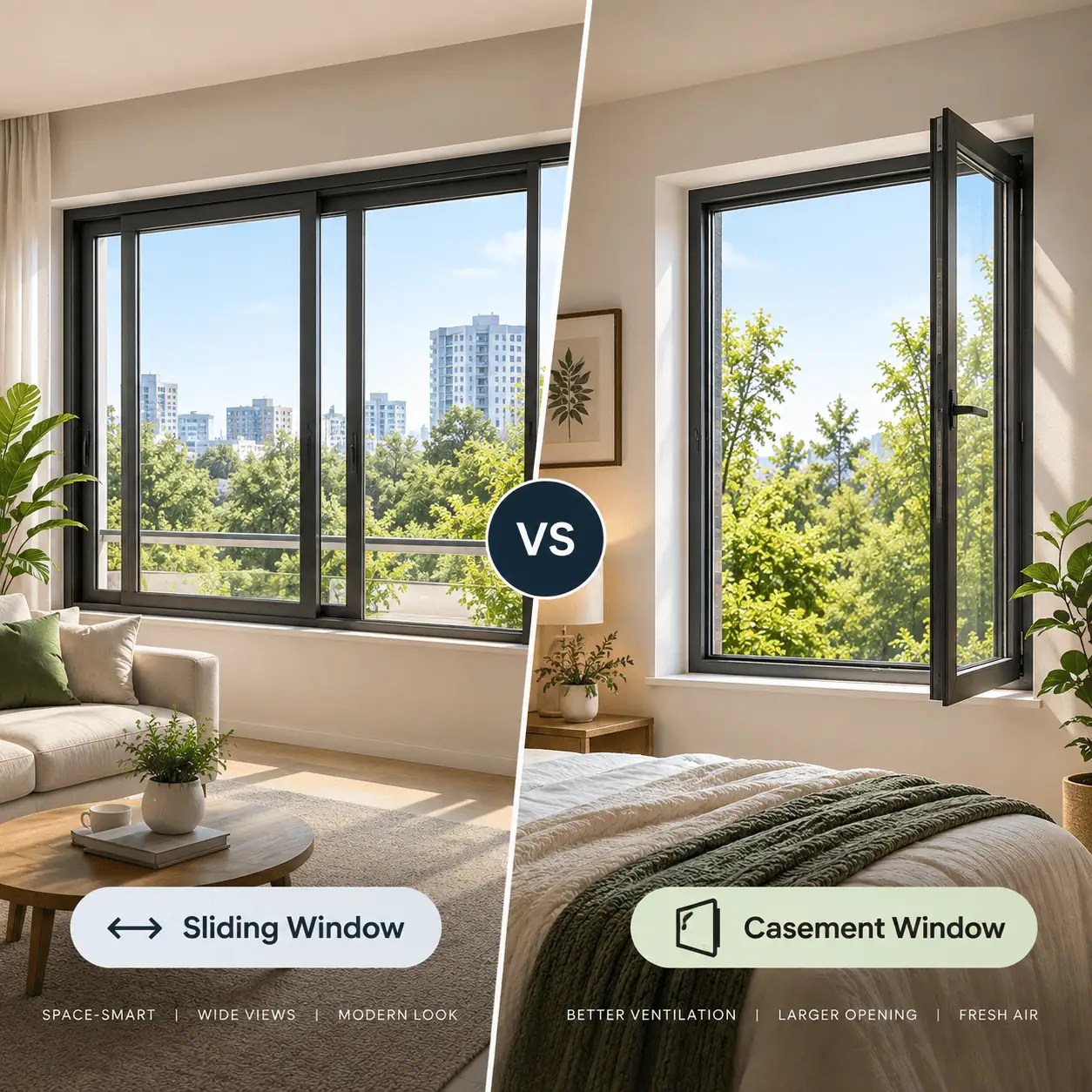
Sliding windows move horizontally along a track. One or more panels slide behind the other, so the window does not require additional space inside or outside the room to open.
Casement windows are hinged on one side and open outward, allowing a larger portion of the window to open at once.
This basic difference affects ventilation, space requirements, cleaning, and how you use the window every day.
Sliding Windows: Simple, Practical and Space-Friendly
Sliding windows are particularly useful when you want a wide glass area without sacrificing usable space around the window.
Because the panels move horizontally, you don’t need to move furniture away from the window or worry about an opening shutter projecting into a walkway.
They can work particularly well in:
- Living rooms
- Bedrooms
- Kitchens
- Apartments
- Spaces facing balconies
Another advantage is the large glass area. Sliding windows can provide generous views and plenty of natural light while maintaining a relatively clean and minimal appearance.
They are also straightforward to operate, making them a practical choice for everyday use.
Where sliding windows have an advantage
Space: No swinging panel means they work well where space is limited.
Views: Large glass areas can provide wide outdoor views.
Design: Their simple horizontal appearance works well with contemporary interiors.
Operation: Sliding the panel open is intuitive and convenient.
Casement Windows: More Opening and More Airflow
Casement windows operate differently. Instead of sliding along a track, the window panel is hinged and opens outward.
This can provide a larger opening compared with many sliding configurations, making casement windows particularly useful when ventilation is a priority.
When open, the sash can also help direct incoming air into the room.
They can be suitable for:
- Bedrooms
- Kitchens
- Living rooms
- Home offices
- Areas where fresh-air circulation is important
Casement windows also create a clean, uninterrupted glass appearance when closed.
Where casement windows have an advantage
Ventilation: A larger opening can allow substantial airflow.
Sealing: When properly installed and closed, the compression seal can provide good resistance to air leakage.
Air direction: The opening sash can help capture and direct outdoor air.
Flexibility: Different configurations can be combined to suit larger openings.
Sliding vs Casement: What About Natural Light?
Both styles can provide plenty of natural light.
The amount of daylight entering a room depends on more than the opening mechanism. Glass area, frame dimensions, window size, orientation, and surrounding structures all matter.
Sliding windows are often chosen for larger horizontal openings, making them useful where you want a broad view and generous glazing.
Casement windows can also provide substantial glass areas, particularly when designed with slimmer profiles.
So if natural light is your main priority, don’t choose purely based on whether the window slides or swings. Look at the overall glazed area and design of the opening.
Which Is Better for Ventilation?
Casement windows generally provide a larger effective opening, which can make them a strong choice for rooms where ventilation is important.
Sliding windows typically open only part of the overall frame because one panel moves behind another.
That doesn’t make sliding windows unsuitable for ventilation. They can still provide useful airflow, especially when positioned strategically.
But if your priority is maximum opening and direct airflow, a casement configuration may be more suitable.
What About Space?
This is one area where sliding windows have a clear practical advantage.
A casement window needs clearance for the sash to open. If there is a narrow passage, furniture, a countertop, or another obstruction immediately outside or inside the opening, this needs to be considered during planning.
Sliding windows don’t have this issue.
The panels remain within the window frame while opening, making them particularly useful for compact rooms and areas where space is limited.
Which Is Easier to Maintain?
Both window types can be relatively low maintenance when good-quality materials and hardware are used.
Sliding windows have tracks and rollers that need to be kept clean so that the panels continue to move smoothly. Dust and debris can accumulate in the track over time.
Casement windows don’t have sliding tracks, but their hinges, handles, locking mechanisms, and seals need periodic attention.
In both cases, regular cleaning and basic hardware maintenance can help maintain smooth operation.
The quality of the hardware and installation also makes a significant difference to long-term performance.
Which Offers Better Noise and Weather Protection?
This shouldn’t be decided by window style alone.
The actual performance depends on factors such as:
- Frame quality
- Glass specification
- Sealing system
- Hardware
- Installation quality
A properly manufactured and installed window can provide good protection against outside noise, dust, air leakage, and weather.
Casement windows can benefit from compression seals when closed, while sliding systems rely heavily on their track, interlocking sections, seals, and drainage design.
If noise reduction or weather protection is particularly important for your home, ask about the glass and complete window system, rather than choosing based only on the opening style.
So, Which One Should You Choose?
Choose sliding windows when:
- Space around the window is limited
- You want a wide horizontal view
- You prefer simple operation
- You want large glass areas
- You don’t want an opening sash to project outward
Consider casement windows when:
- Ventilation is a major priority
- You want a larger opening
- You want to direct airflow into the room
- The surrounding space allows the sash to open
- You prefer a hinged window design
For some homes, the best solution may even be a combination of both.
A living room might use large sliding windows for views and space efficiency, while bedrooms or kitchens may use casement windows where airflow is more important.
Don't Choose a Window Based on Style Alone
The best window is the one that works with the room.
Before making a decision, consider:
Room size: How much space is available around the opening?
Ventilation: How much airflow does the room need?
Natural light: How much glazing would improve the space?
Views: Do you want a wide, uninterrupted outdoor view?
Furniture: Will an opening sash interfere with anything?
Maintenance: Can the tracks, glass, and hardware be easily accessed?
Weather: What level of sealing and drainage does the location require?
Thinking about these factors before installation can help you choose a system that remains comfortable and practical for years.
Explore uPVC Window Solutions for Your Home
Whether you prefer the clean practicality of sliding windows or the ventilation benefits of casement windows, the right specification and installation are essential for long-term performance.
UrbanSkylight offers a range of window solutions designed for different home layouts, architectural styles, and functional requirements.
Explore our uPVC sliding and casement windows:
https://urbanskylight.com/upvc/windows/sliding/
Final Thoughts
Sliding and casement windows can both be excellent choices for modern homes.
The real question isn’t “Which window is better?”
It’s “Which window works better for this particular room?”
If space and wide views are your priority, sliding windows can be a practical solution. If ventilation and a larger opening matter more, casement windows may be worth considering.
Choose based on how you want the room to look, feel, and function, and you’ll be much more likely to end up with windows that work for your home rather than simply look good in it.