Skip to content

Can You Mix Different Window Styles in the Same House?
Have you ever wondered whether every window in your home needs to look exactly the same?
Not necessarily.
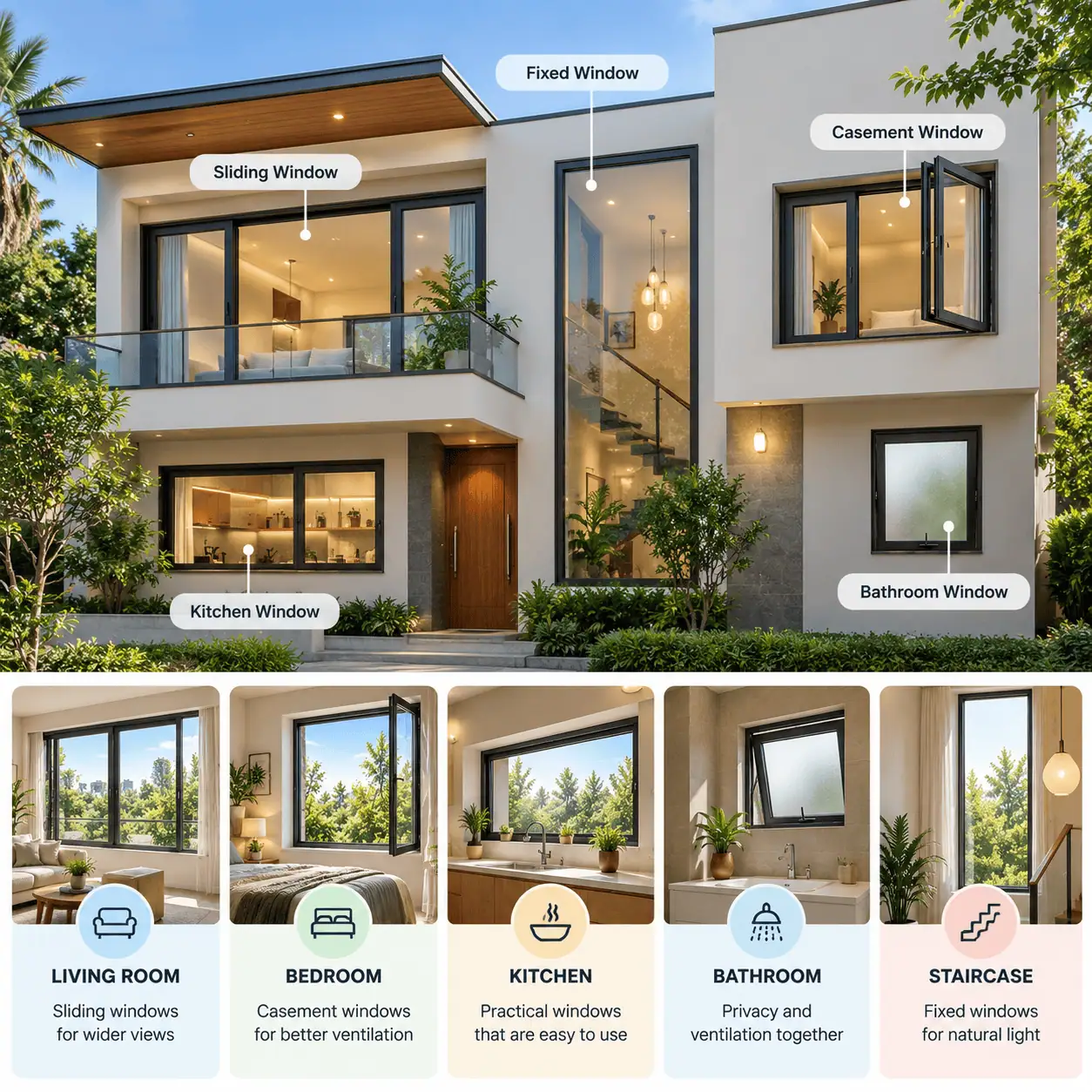
In fact, using different window styles in different rooms can make your home more functional, comfortable, and visually interesting. A living room may benefit from wide sliding windows, while a bedroom might work better with casement windows that provide a generous opening for ventilation. A staircase, meanwhile, may need a fixed window simply to bring in more natural light.
The trick is knowing which styles work best together.
Yes, you can mix different window styles in the same house. When planned properly, a combination of sliding, casement, fixed, and tilt-and-turn windows can improve everyday functionality while maintaining a consistent architectural appearance.
Why Use Different Window Styles?
Every room serves a different purpose, so it makes sense that its windows should meet different needs.
A kitchen needs ventilation to help remove cooking odours and moisture. A living room may need larger glass panels for outdoor views and natural light. A bathroom requires privacy, while a staircase might benefit from a fixed window that brightens an otherwise dark area.
Installing the same window style everywhere may work, but it isn’t always the most practical solution.
By selecting windows according to each room’s requirements, you can make better use of available space, improve ventilation, and create interiors that feel brighter and more comfortable.
How to Combine Window Styles in Different Rooms
Living Room: Sliding Windows for Wider Views
Living rooms are often the best place to introduce large windows. They help connect the indoors with the outdoors and allow natural light to spread throughout the space.
Sliding windows are a practical choice because their panels move horizontally without requiring additional clearance to swing open. They work particularly well in rooms where furniture is positioned close to the windows.
For a more distinctive design, you can also combine sliding windows with fixed glass panels to create a wider glazed area.
Bedrooms: Casement Windows for Ventilation
Bedrooms benefit from fresh air, natural light, and a comfortable indoor environment.
Casement windows can be a good option because their hinged panels open widely, allowing substantial airflow when conditions permit. They can also provide effective sealing when closed, depending on the quality of the window system and installation.
If your bedroom already has large windows, you could combine a fixed panel with an opening casement section to balance the view with ventilation.
Kitchen: Practical Windows That Are Easy to Use
Kitchens need windows that work around countertops, cabinets, sinks, and other fixtures.
Sliding windows can be useful where space is limited because the panels do not swing into the kitchen. Casement windows are another option when a larger opening is needed for ventilation, provided there is sufficient clearance.
The best choice depends on the kitchen layout and how frequently you need to open the window.
Bathrooms: Privacy Comes First
Bathroom windows should balance ventilation, daylight, and privacy.
A smaller opening window with suitable privacy glazing can be a practical choice. Depending on the design, casement or tilt-and-turn windows may also work well.
The goal is to introduce daylight and allow moisture to escape without compromising privacy.
Staircases and Passageways: Fixed Windows for Natural Light
Not every window needs to open.
In staircases, corridors, and other areas where ventilation is less important, fixed windows can bring in natural light while creating a clean architectural appearance.
They can also be combined with opening windows elsewhere in the same space if additional airflow is required.
How to Make Different Window Styles Look Consistent
While functionality is important, appearance matters too. Mixing window styles works best when the overall design feels intentional rather than random.
Here are a few things to consider.
Keep the frame colour consistent. Using the same or complementary frame colours across different window styles helps create a unified appearance. For example, matching dark frames throughout the home can make sliding and casement windows look like part of the same design.
Pay attention to frame proportions. Windows do not need to be identical in size, but their proportions should suit the building. Aligning window heads or maintaining consistent frame widths where practical can help the exterior look more organised.
Consider the architectural style. A contemporary home may suit large glazed panels, slim-looking frames, and clean lines. A more traditional design may call for different proportions and window arrangements.
Think about the exterior as a whole. Before finalising your choices, look at how the windows will appear together from the outside. A combination that works beautifully indoors should also complement the home’s façade.
Choose compatible materials and finishes. Different opening mechanisms can still look cohesive when their finishes, frame designs, and overall quality are coordinated.
Can You Mix Sliding, Casement, and Fixed Windows?
Absolutely. These styles can complement one another because each serves a different purpose.
Sliding windows: Suitable for areas where space-saving operation and wide views are priorities.
Casement windows: Useful where a larger opening and substantial ventilation are desirable.
Fixed windows: Ideal for bringing in daylight and framing views where opening the window is unnecessary.
Tilt-and-turn windows: Offer different opening positions for ventilation and convenient access, depending on the system.
You can even combine two styles within a single larger window arrangement, such as a fixed panel beside an opening casement window.
However, not every combination is suitable for every building. Window dimensions, structural requirements, hardware, glazing, and installation details should be assessed before finalising the design.
Common Mistakes to Avoid
Mixing window styles gives you flexibility, but a little planning goes a long way.
Avoid choosing windows solely because they look attractive in a showroom. Consider how they will function in the actual room, including the available opening space and ventilation requirements.
It is also worth avoiding too many unrelated frame colours or designs, which can make the exterior feel visually inconsistent.
Finally, don’t overlook glazing, sealing, drainage, and installation quality. A well-designed window should do more than look good. It should perform reliably in everyday conditions.
Plan Your Windows Around Your Home
The best window arrangement is one that responds to the way you live.
You might choose sliding windows for your living room, casement windows for bedrooms, privacy-focused designs for bathrooms, and fixed windows for staircases. With consistent frame finishes and thoughtful placement, these different styles can work together beautifully.
At UrbanSkylight, you can explore a range of window styles suited to different room layouts, architectural designs, and functional requirements.
Explore our uPVC window collection:
https://urbanskylight.com/upvc/windows/
Final Thoughts
You don’t have to use the same window style throughout your home to achieve a cohesive design.
In fact, combining different styles can help you get the best balance of ventilation, natural light, space efficiency, and visual appeal in every room.
The secret is simple: choose each window for its purpose, then bring the overall design together through consistent colours, proportions, and finishes.
When planned well, different window styles don’t compete with one another. They work together to make your home more comfortable, practical, and attractive.