Skip to content
How to Choose the Right uPVC Window Style for Different Rooms
Choosing windows for a home is not simply about picking a frame colour or the style that looks good in a catalogue.
Different rooms have different requirements. A living room may need maximum natural light and a wider view, while a bathroom may need privacy and ventilation. A bedroom might benefit from better noise control, while a kitchen needs a practical combination of airflow and easy operation.
This is why choosing the right uPVC window style for each room can make a noticeable difference to your home’s comfort, appearance, and everyday functionality.
With several styles available, understanding where each one works best can make the decision much easier.
Start With What the Room Needs
Before choosing a window, think about four basic questions:
How much natural light does the room need?
How much ventilation is required?
How much space is available?
How often will the window be opened?
Once these are clear, choosing a suitable window style becomes much simpler.
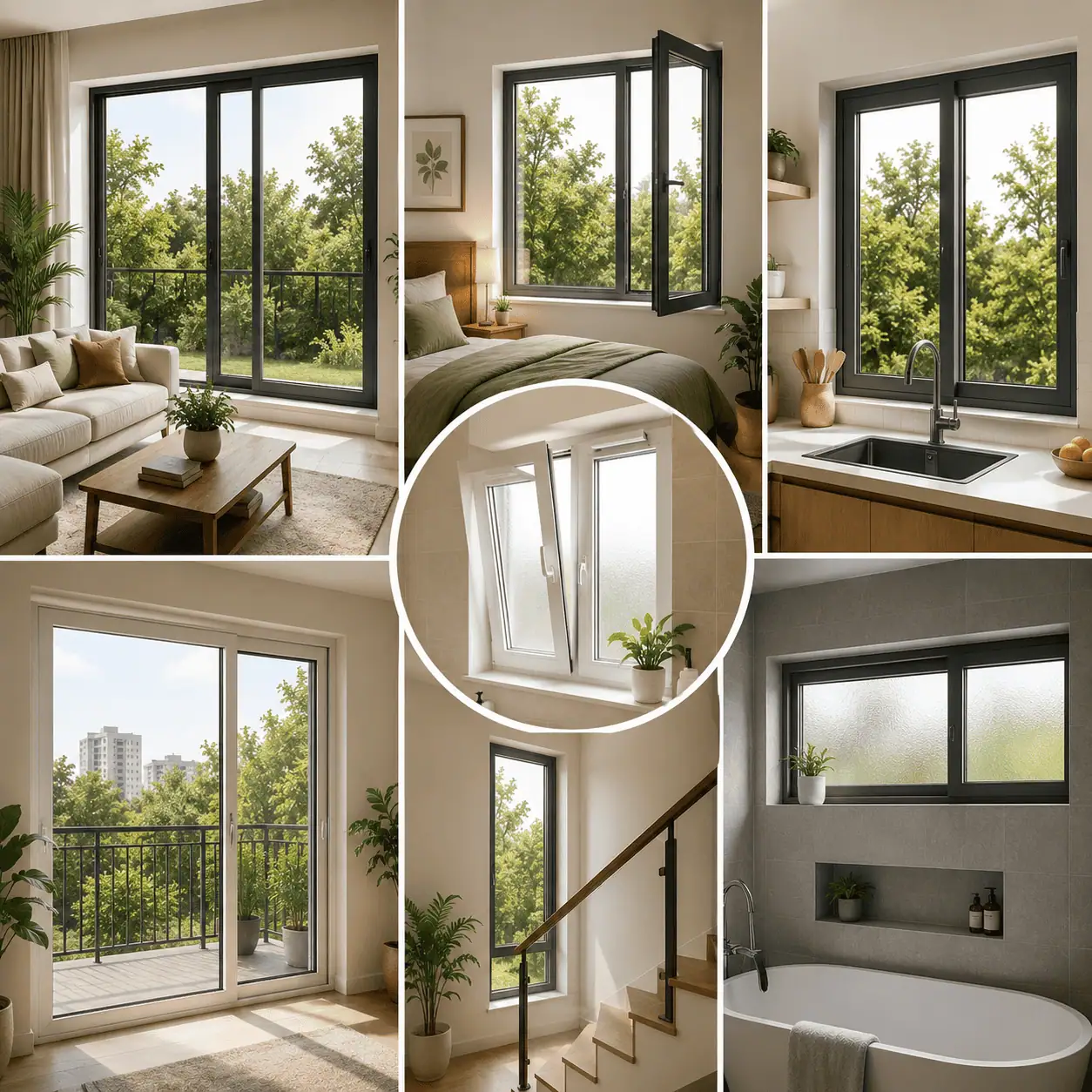
Living Room: Make the Most of Light and Views
The living room is usually one of the largest and most frequently used spaces in a home. It is also where homeowners tend to want the best combination of natural light, ventilation, and outdoor views.
Sliding windows are a popular choice for living rooms because they provide a wide glass area while being easy to operate. They also do not require additional space for the shutters to swing open.
For homes where ventilation is a bigger priority, casement windows can be an excellent option. Their opening mechanism allows fresh air to enter more directly.
For a modern architectural look, larger fixed glass sections can also be combined with opening windows to create a wider glazed area while maintaining ventilation where required.
Bedrooms: Focus on Comfort and Ventilation
Bedrooms need to feel comfortable throughout the day and night.
Good ventilation is important, but so is controlling outside noise, dust, and unwanted heat.
Casement windows work particularly well in bedrooms because they can provide a generous opening for ventilation while offering effective sealing when closed.
For bedrooms facing busy roads or noisy surroundings, the choice of glazing becomes especially important. The right glass and properly sealed frame can help reduce outside noise and create a quieter indoor environment.
If the bedroom has limited wall space, a sliding window can also provide natural light and ventilation without requiring additional clearance around the window.
Kitchen: Ventilation Comes First
Kitchens naturally produce heat, steam, and cooking odours, so ventilation should be a major consideration when choosing a kitchen window.
A casement window can be a practical choice because it can be opened widely when additional airflow is needed.
Depending on the kitchen layout, a window above or near the countertop can also bring in useful daylight while making the space feel less enclosed.
For smaller kitchens, sliding windows are another practical option because they provide ventilation without interfering with countertops, cabinets, or other nearby elements.
The key is to choose a design that is easy to operate and does not interfere with the way the kitchen is used.
Bathrooms: Privacy and Ventilation Matter Most
Bathrooms require a slightly different approach.
Here, natural light is useful, but privacy and ventilation are usually more important than having a large open glass area.
A smaller casement or tilt-style opening can provide ventilation while maintaining privacy, especially when combined with suitable privacy glass.
A well-designed bathroom window can help reduce the feeling of an enclosed space while allowing moisture and humidity to escape.
The frame and hardware should also be suitable for a moisture-prone environment.
Balconies and Larger Openings: Think Beyond Traditional Windows
When the goal is to connect a room with a balcony, terrace, or garden, a conventional window may not be enough.
This is where larger uPVC door systems and larger opening configurations can become useful.
Large glazed openings can bring in substantial natural light while creating a stronger visual connection between indoor and outdoor areas.
For these spaces, factors such as opening size, hardware, glass specification, security, and smooth operation become particularly important.
Staircases and Passage Areas: Bring Light Into Dark Spaces
Staircases, corridors, and passageways often receive very little natural light.
A carefully positioned window can make these spaces feel significantly brighter without requiring major changes to the interior.
Fixed windows can be useful where ventilation is not essential and the primary goal is to introduce daylight.
If ventilation is also required, a combination of fixed and opening sections can provide a better balance.
These areas are also excellent opportunities to use unusual window proportions or vertical designs to complement the architecture of the home.
What About Sliding, Casement, Tilt and Turn, and Other Styles?
There is no single “best” uPVC window for every home.
Each style has its own strengths.
Casement Windows
A good choice when ventilation and a wide opening are important.
They work particularly well in bedrooms, kitchens, living rooms, and areas where fresh air is a priority.
Sliding Windows
Useful when space is limited and you want a practical window with a wide glass area.
They are commonly used in living rooms, bedrooms, kitchens, and apartments.
Tilt and Turn Windows
These offer flexibility by providing different opening positions. They can be useful when homeowners want controlled ventilation along with easy cleaning and operation.
Fixed Windows
Best suited for areas where the main requirement is natural light and an unobstructed view rather than ventilation.
They can also be combined with opening windows to create larger glazed designs.
Vertical Sliding Windows
These can add a distinctive architectural appearance while providing a practical opening mechanism, particularly in homes where a more traditional or contemporary-classic aesthetic is desired.
The best choice ultimately depends on the room, architecture, available space, and how you want to use the window.
Don't Choose Windows Based on Appearance Alone
A window can look perfect in a showroom and still be unsuitable for a particular room.
Before making a decision, consider:
Ventilation: Does the room need frequent airflow?
Natural light: How much daylight is available already?
Space: Will an opening shutter interfere with furniture or other fixtures?
Privacy: Does the room require privacy glass or a smaller opening?
Noise: Is the room exposed to traffic or other outside sounds?
Maintenance: Will the window be easy to clean and operate?
Glass: Does the room need better heat, noise, or safety performance?
Installation: Will the window be properly sealed and installed?
Thinking about these factors before ordering can prevent expensive changes later.
The Right Window Is the One That Fits the Room
The most suitable uPVC window style is not necessarily the most expensive one or the one that looks most impressive.
It is the one that solves the specific needs of the room.
A well-planned home might use casement windows in bedrooms, sliding windows in living areas, practical opening windows in kitchens, privacy-focused designs in bathrooms, and fixed glazing where natural light and views are the priority.
This approach creates a home where every window has a purpose.
Explore uPVC Window Solutions for Your Home
At UrbanSkylight, we offer a range of uPVC window styles designed for different architectural requirements and everyday needs.
Explore our collection of uPVC windows and find the right style for your space.
Explore all uPVC Windows:
https://urbanskylight.com/upvc/windows/
Final Thoughts
Choosing the right uPVC window is ultimately about understanding how each room works.
Think about light, ventilation, space, privacy, views, noise, and everyday usability before deciding on a style.
When the window is chosen around the needs of the room rather than simply its appearance, it becomes more than a building element. It becomes part of what makes the home comfortable, functional, and enjoyable to live in.