Skip to content
How Skylights Help Reduce Electricity Usage During Daytime
Electricity consumption during the daytime is often higher than necessary because many homes rely heavily on artificial lighting, even when sunlight is available outside.
Skylights offer a simple and effective solution by bringing natural daylight directly into indoor spaces. When installed properly, they can significantly reduce the need for electric lights during the day while also improving the overall feel of a home.
Let’s understand how skylights help reduce electricity usage and why they are becoming a popular choice in modern homes.
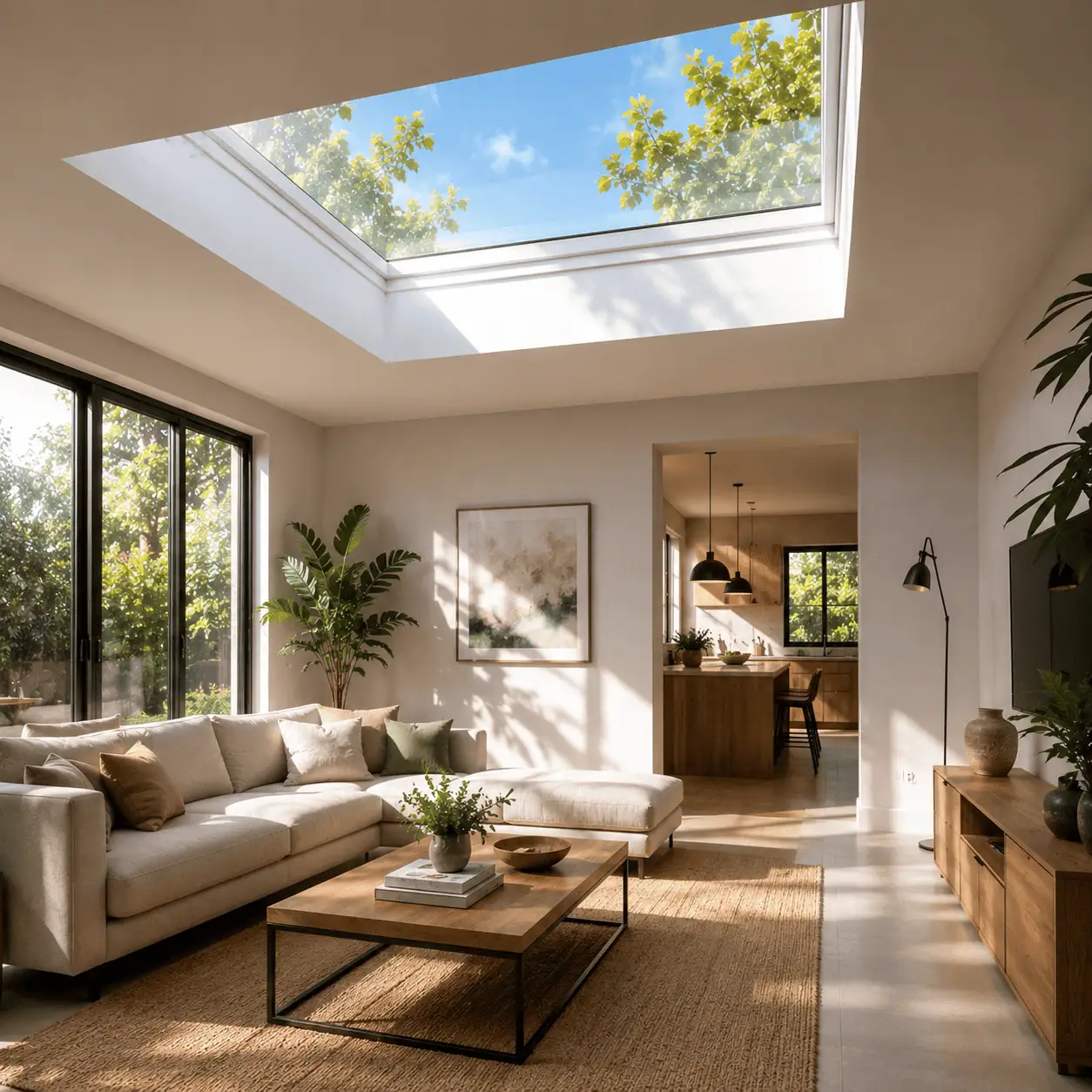
What Makes Skylights Different?
Unlike regular windows placed on walls, skylights are installed on the roof. This allows them to capture sunlight from above and distribute it more evenly throughout the room.
Because of this positioning, skylights often bring in:
- More natural light
- Better daylight coverage
- Brighter interiors throughout the day
Even smaller skylights can make a noticeable difference in indoor brightness.
1. Reduced Dependence on Artificial Lighting
The biggest advantage of skylights is the ability to reduce daytime lighting usage.
Rooms that usually require lights during the day, such as:
- Hallways
- Bathrooms
- Kitchens
- Staircases
can remain naturally illuminated for longer hours.
This directly lowers electricity consumption and helps reduce energy bills over time.
2. Better Daylight Distribution
Natural light entering through side windows may not always reach deeper parts of a room.
Skylights help distribute light more evenly because sunlight enters from above.
This creates:
- Fewer dark corners
- Brighter interiors
- More balanced lighting across the space
As a result, homeowners rely less on multiple light fixtures during daytime hours.
3. Improved Energy Efficiency
Modern skylights are designed to improve energy efficiency while minimizing heat issues.
Features such as:
- Insulated glazing
- UV-protective glass
- Ventilated designs
help maintain indoor comfort while still allowing natural light inside.
Properly selected skylights can support both lighting efficiency and indoor temperature control.
4. Natural Light Improves Living Comfort
Apart from energy savings, natural daylight enhances the overall atmosphere of a home.
Benefits include:
- Better mood and productivity
- Reduced eye strain
- More welcoming interiors
- Improved visual comfort
Bright spaces often feel larger, cleaner, and more pleasant to spend time in.
5. Ideal Areas for Skylight Installation
Skylights are especially effective in spaces that receive limited daylight.
Common installation areas include:
- Living rooms
- Kitchens
- Bathrooms
- Hallways
- Staircases
- Home offices
Strategic placement maximizes daylight throughout the day.
Important Factors to Consider
To get the best energy-saving benefits, proper planning is important.
Placement
The direction and position of the skylight affect how much sunlight enters the room.
Glazing
Using the right glass helps reduce glare and excess heat.
Installation Quality
Professional installation prevents leakage and improves long-term performance.
Can Skylights Completely Eliminate Daytime Lighting?
Not entirely in every situation, but they can significantly reduce the need for artificial lighting during daylight hours.
The amount of savings depends on:
- Skylight size
- Room placement
- Weather conditions
- Home design
However, many homeowners experience noticeable reductions in daytime electricity usage after installation.
Upgrade Your Home with Smarter Natural Lighting
If you want to improve daylight, reduce electricity usage, and create a brighter living environment, skylights can be an excellent solution.
Explore modern skylight and window solutions designed for comfort, efficiency, and long-term performance.
Final Thoughts
Skylights are more than just a design feature. They are a practical way to bring natural light into your home while reducing daytime electricity consumption.
With proper placement and quality installation, skylights can help create brighter, more energy-efficient living spaces that feel open, comfortable, and connected to natural light.